GPS Simulator
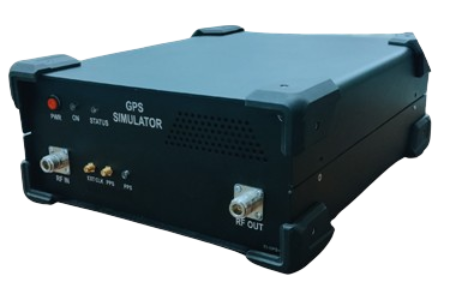
The GPS simulator is a cutting-edge tool designed to enhance the testing and validation processes for GPS-dependent applications. Leveraging advanced Software Defined Radio (SDR) architecture, this simulator offers remarkable flexibility and performance. It operates by generating GPS signals that can be customized to simulate different geographical locations and time settings, thus making it suitable for diverse testing scenarios.
Purpose and Operation
The primary purpose of the GPS simulator is to provide a reliable environment for testing GPS devices and systems. This is achieved through its ability to replicate a wide range of GPS conditions, including urban canyons, rural landscapes, and various atmospheric phenomena.
Customizable Parameters
The GPS simulator provides comprehensive parameter customization through time configuration that allows adjustment to any historical or future moment, enabling time-sensitive application testing. Location configuration accepts precise geographical coordinates to simulate global positioning scenarios anywhere on Earth. Satellite configuration tools enable modification of satellite count and orbital positions for accuracy assessment under varying constellation conditions. Signal strength adjustment permits power level modifications to replicate diverse testing scenarios from optimal to marginal reception conditions. Atmospheric condition simulation models ionospheric and tropospheric effects to evaluate system performance under real-world environmental influences. Multi-path effect replication generates signal reflections characteristic of urban environments to test receiver resilience in challenging propagation conditions.
Key Benefits
The GPS simulator delivers exceptional flexibility by enabling easy adjustment of simulation parameters to meet specific testing requirements. Its Software Defined Radio (SDR) architecture ensures high-fidelity signal generation for precise accuracy in all testing scenarios. By simulating real-world conditions in controlled environments, it significantly accelerates development cycles and enhances operational efficiency. The solution proves highly cost-effective by eliminating the need for expensive and time-consuming field testing campaigns. It guarantees repeatable testing through consistent, controlled conditions that produce reliable and verifiable results. Furthermore, the simulator offers scalable architecture that seamlessly supports testing ranging from single devices to complex multi-device scenarios.
Technical Specifications
The GPS simulator features a Software Defined Radio (SDR) based architecture capable of real-time GPS/GNSS signal synthesis. It supports multiple frequency bands including L1, L2, and L5 GPS bands with multi-constellation support, offering configurable multi-channel output. With a dynamic range exceeding 100 dB and phase noise below -90 dBc/Hz at 10 kHz offset, it delivers exceptional signal quality. The simulator achieves time accuracy better than 10 nanoseconds and position accuracy within 1 meter simulation capability. It provides versatile connectivity through Ethernet, USB, and web-based control interfaces, and operates on a 12V DC, 2A power supply.
Enhanced Testing Capabilities
By leveraging these features, the GPS simulator can replicate a variety of real-world settings. For instance, a developer working on an autonomous vehicle may simulate urban environments to assess the vehicle's navigation system under challenging conditions, such as high-rise buildings that obstruct satellite signals. Similarly, a telecommunications engineer can configure the simulator to test signal strength and accuracy in remote areas where GPS coverage is typically weak.
Key Testing Scenarios:
- Urban canyon effects with signal obstruction
- Weak signal scenarios for sensitivity testing
- Multi-path interference simulation
- High-dynamic motion scenarios
- Cold start and hot start acquisition testing
- Jamming and interference resistance testing
Applications Across Industries
Automotive
Testing navigation systems, autonomous driving features, and telematics units for vehicles under various GPS conditions.
Aerospace
Validating avionics, aircraft navigation systems, and satellite communication equipment with precise GPS simulation.
Telecommunications
Ensuring reliable GPS signal reception for communication technologies and network synchronization.
Consumer Electronics
Testing smartphones, wearables, and IoT devices with GPS functionality in controlled environments.
Defense & Security
Military navigation system testing, encrypted GPS signal validation, and anti-jamming capability assessment.
Research & Education
Academic research, GPS algorithm development, and educational demonstrations in universities and labs.
User Interface & Control
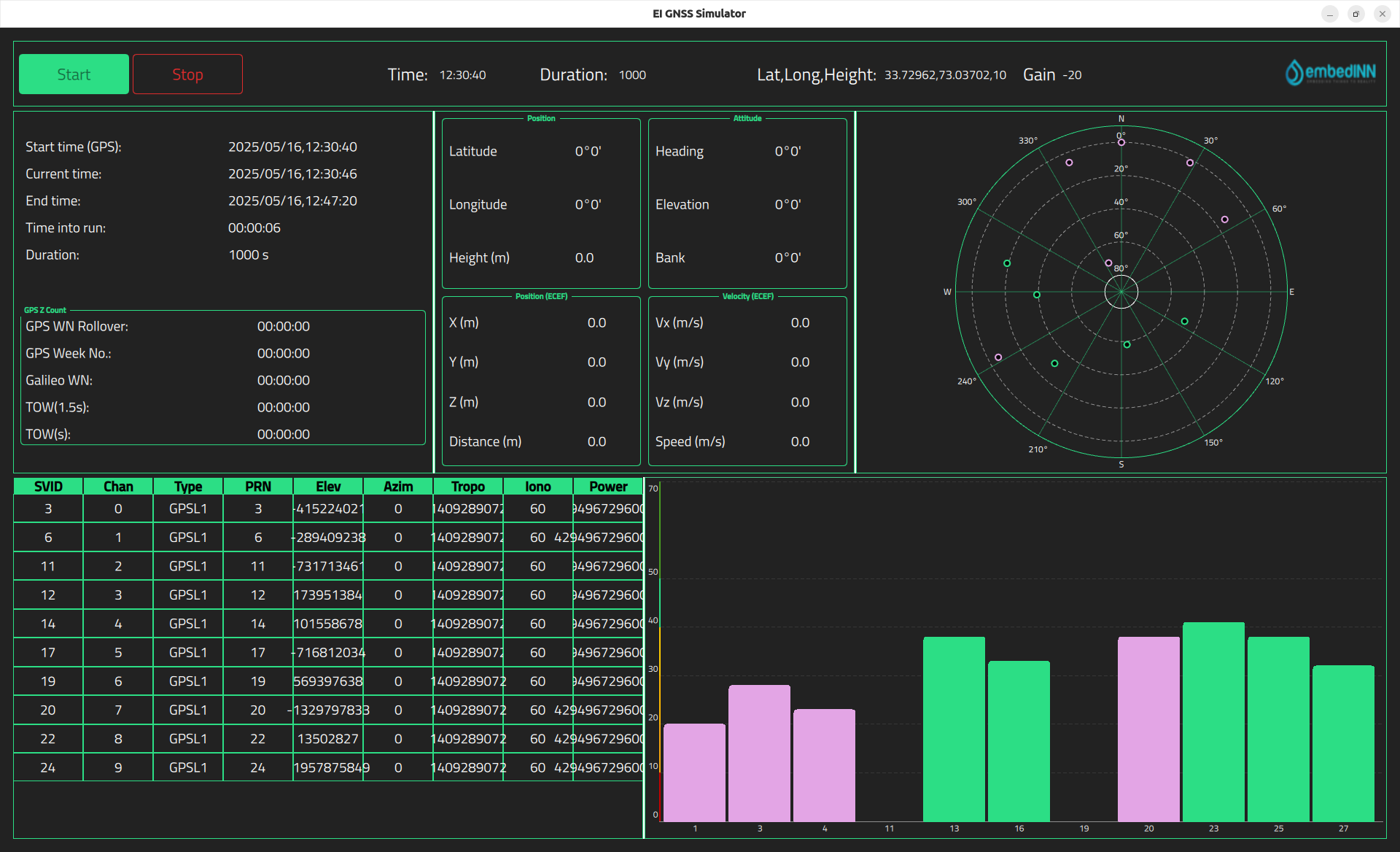
The GPS simulator features a comprehensive web-based GUI control interface with real-time monitoring capabilities for intuitive operation and visualization. It offers extensive automation support through REST API integration for seamless testing workflows and supports advanced scenario scripting with Python and MATLAB for customized test development. A rich library of predefined testing scenarios accelerates setup while live monitoring of signal quality and system parameters ensures precise control. Comprehensive data logging capabilities facilitate thorough test data recording and export for detailed analysis and reporting.
Support & Integration
The GPS simulator comes with comprehensive support and integration capabilities:
The GPS simulator is backed by comprehensive support services including regular firmware updates and feature enhancements to ensure optimal performance. Complete documentation encompassing user manuals, API documentation, and application notes facilitates seamless integration. Dedicated integration support assists with test automation and system integration, while flexible training options—available both on-site and remotely—empower your team with essential operational expertise. With its user-friendly interface and robust capabilities, the GPS simulator serves as an essential asset for any organization reliant on GPS technology. The ability to create repeatable, controlled testing environments significantly reduces development time and cost while simultaneously improving product quality and reliability.
READY TO GET STARTED
Contact us for more information about GPS Simulator and how it can meet your testing requirements.